
IMUGA portal help
IMUGA Accommodation Field: Resorts and Boats
A field-by-field guide to the accommodation section of the IMUGA declaration: private island resorts, city hotels, guesthouses, dive liveaboards and multi-island trips.
The accommodation field is the part of the Maldives Immigration Traveller Declaration that travellers get wrong most often, because the Maldives is not a country where you simply type a street address. A private island resort, a Hulhumale guesthouse and a dive liveaboard are three completely different answers, and the IMUGA portal expects the right one.
Short answer: declare the place where you will physically sleep on your first night, using the exact commercial name of the property plus its atoll. For a safari boat or liveaboard, declare the vessel name and the operator's registered base. If your trip covers several islands, declare the first accommodation and keep the rest of your bookings with you.
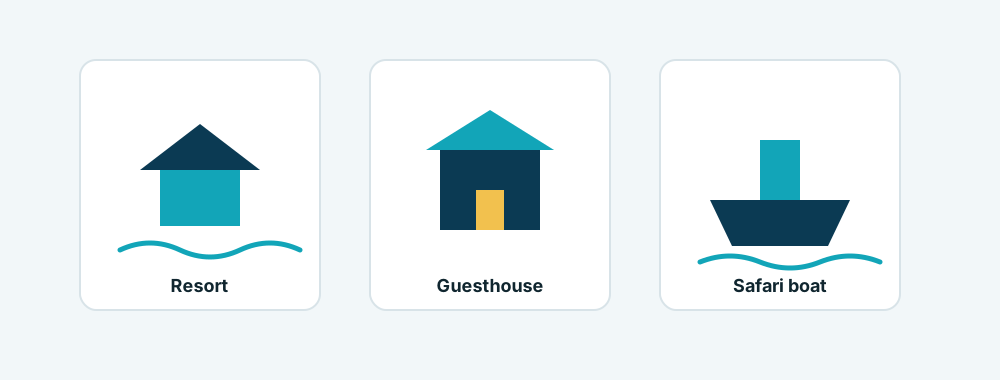
Why the accommodation field matters more than you think
Maldives Immigration uses the accommodation entry for two practical purposes. The first is the no-cost 30-day visa on arrival, which is granted on the basis of a confirmed booking for a registered tourist establishment. The second is internal: knowing which island a visitor is going to lets the authorities match arrivals against licensed properties.
That is why a vague answer creates friction. "Maldives", "beach hotel" or "booking.com" tells the system nothing. An immigration officer at Velana International Airport (MLE) may then ask for your voucher at the counter, which is exactly the delay the declaration is meant to remove. There is a second, quieter reason: nearly every resort transfer in the country is arranged by the property itself, and seaplane and speedboat manifests are built from guest lists. When the name you declared matches the name on the transfer desk sign, everything lines up.
In short: the accommodation field is the link between your arrival and a licensed property, so it has to be specific enough to identify one place.
Private island resorts: exact name and atoll
Most visitors stay on a one-island-one-resort property. These have long commercial names, and several of them share words. Type the full name as it appears on your voucher, then add the atoll.
Correct examples of the format:
Kurumba Maldives, North Male AtollSoneva Fushi, Baa AtollConrad Maldives Rangali Island, South Ari Atoll
What to avoid:
- Shortening to a single word ("Kurumba", "Rangali") when the resort group runs several properties.
- Using the island's geographic name only, without the resort brand.
- Using the name of the tour operator or the online travel agency that sold the package.
There is no street address to give, and that is normal. A resort island is its own address. If the form asks for an address line, the property name plus the atoll is the accepted answer, followed by "Republic of Maldives" if a country line exists.
Worth knowing: resorts almost always send the exact details you need in the pre-arrival email that confirms your seaplane or speedboat transfer. That message contains the legal property name, the atoll and a contact phone number. Open it before you start the declaration.
In short: full commercial name plus atoll, copied from the voucher, not from memory.
Hotels in Male and Hulhumale
City hotels behave like hotels anywhere else, and they are the one case where a real street address exists. Guests staying near the airport, or overnighting between flights, will typically use a property in Hulhumale, the reclaimed island connected to the airport by the Sinamale Bridge.
Here you can and should give:
- The hotel name.
- The street or house name and number.
- The island: Hulhumale or Male.
- The city: Male, Republic of Maldives.
Hulhumale addresses look unfamiliar the first time because they combine a lot number and a "Phase" reference. Copy them exactly as the hotel wrote them; do not normalise them into a European format.
In short: for Male and Hulhumale, use the real postal address, exactly as the hotel wrote it.
Guesthouses on local islands
Guesthouse tourism on inhabited islands is now a large part of the market: Maafushi, Dhigurah, Thulusdhoo, Fulidhoo, Ukulhas and many others. The declaration treats these exactly like any other registered accommodation, but two details deserve attention.
First, the island name is essential. There are guesthouses with near-identical names on different
islands, so Sunrise Inn, Maafushi, Kaafu Atoll is unambiguous while Sunrise Inn is not.
Second, guesthouses are reached by public ferry or shared speedboat, so your arrival at the island may happen a day after your arrival in the country. If you sleep one night in Male before catching the morning ferry, that first night is the accommodation you declare on arrival.
In short: guesthouse name plus island plus atoll, and declare the place you actually sleep on night one.
Safari boats and dive liveaboards
A safari boat — the local term for a liveaboard — is accommodation that moves. Over a week a dive boat may cross three atolls and never tie up at the same anchorage twice. The declaration has no way to represent that, and it does not need to.
Declare the vessel, not the position:
- Accommodation type: liveaboard, safari boat or vessel, if the form offers such an option.
- Name: the boat's commercial name, for example
MV Blue Horizon. - Location: the operator's registered base or home port, usually in Male or North Male Atoll.
If the form insists on an island or an address, use the operator's office address; the boat's licence is issued to that operator, so the two records match. The practical detail nobody warns you about: on arrival day you are almost never taken straight to the boat. Many cruises begin with a night in a Male-area hotel or a late boarding at Hulhumale jetty. Ask the operator, before you file, which of the two applies on your dates.
Worth knowing: liveaboard operators are used to this question. A short message asking for "the exact vessel name and registered base for the immigration declaration" normally gets you a copy-paste answer within a day.
In short: declare the boat name and the operator's base; a moving anchorage is not a problem.
Accommodation type to declaration entry
| Accommodation type | What to declare | Typical source of the data |
|---|---|---|
| Private island resort | Full resort name + atoll | Transfer confirmation email from the resort |
| Male or Hulhumale hotel | Hotel name + full street address + island | Booking confirmation |
| Guesthouse, local island | Guesthouse name + island + atoll | Guesthouse WhatsApp or email confirmation |
| Safari boat / liveaboard | Vessel name + operator's registered base | Cruise operator's pre-departure pack |
| Private yacht or charter | Vessel name + agent's details + entry port | Local shipping agent |
| Staying with residents | House name, island and atoll | Your host |
| Airport transit hotel | Hotel name + Hulhumale address | Airport hotel confirmation |
| Multi-island itinerary | First night's accommodation only | First voucher in the sequence |
In short: one row, one answer; find your row before you open the portal.
Multi-island trips: which address goes in the box
Split-stay itineraries are common: two nights in Male, four in a guesthouse, five on a resort. The declaration is not a full itinerary form. It asks where you are staying, and the operative answer is your first night in the country.
The reasoning is simple: the purpose of the field is to confirm you have somewhere legitimate to go when you leave the arrivals hall. That said, carry the rest. A printed or offline copy of every voucher weighs nothing and answers any follow-up question at the counter in seconds. If the form offers a second accommodation line, using it to list the sequence is a sensible extra.
In short: declare night one, carry the rest of the vouchers offline.
Unconfirmed bookings and last-minute changes
Two situations cause genuine anxiety, and both have practical answers.
You have not booked yet. The visa on arrival is granted on the basis of a confirmed booking, so travelling without one is a real risk, not a paperwork detail. Book at least the first night before filing; a single refundable night on a registered property is enough to complete the field honestly.
Your accommodation changed after you filed. Resorts close for refurbishment, flights are rerouted, guesthouses overbook. If the change happens before you travel, correct the declaration in the portal or submit a fresh one for the same flight, then use the newest QR code — our guide on changing or cancelling an IMUGA declaration covers that. If the change happens after you have landed, there is nothing to fix: the declaration records your stated plan at the time of arrival, not a binding contract.
In short: book night one before filing; if plans change beforehand, refile rather than improvise.
Who gives you the exact wording
You rarely need to guess. Each accommodation type has an obvious source:
- Resorts send a pre-arrival or transfer email with the legal property name and atoll.
- Hotels put the full address in the reservation confirmation.
- Guesthouses answer directly by WhatsApp, often within minutes.
- Liveaboards include vessel details in the pre-departure information pack.
- Travel agents can request all of the above on your behalf.
If you booked through a large online platform, be careful: the listing name is sometimes a marketing variant rather than the registered property name. The voucher beats the listing page.

In short: the property that is expecting you already has the exact wording written down.
How the accommodation entry connects to the rest of the trip
The accommodation you declare quietly drives several other things. Your green tax is collected per person per night by that property, and your seaplane or speedboat transfer is booked against its guest list. If you are connecting onward the same day, the answer also interacts with your transit plan.
Departure works the same way in reverse. The departure declaration, filed within the 96-hour window before your outbound flight, asks where you have been staying. Use the property you are actually checking out of, which is often not the one you declared on arrival.
In short: arrival and departure declarations can legitimately carry different accommodation.
Common accommodation mistakes worth avoiding
- Writing the tour operator's name instead of the property's.
- Naming the resort brand without the specific island when the group runs several.
- Declaring the resort when your first night is actually an airport hotel.
- Giving a liveaboard's route instead of its vessel name.
- Leaving the field blank because "the resort arranges everything".
- Filing before you have any booking at all.
If the portal itself refuses your entry or times out mid-form, that is a different problem; our guide to IMUGA portal errors and fixes has the workarounds.
In short: most errors come from typing a brand rather than a place.
Key points
- Declare where you sleep on your first night, using the exact commercial property name.
- Resorts: full name plus atoll; no street address exists and none is expected.
- Male and Hulhumale hotels: use the real postal address as written by the hotel.
- Guesthouses: always add the island as well as the atoll.
- Liveaboards: declare the vessel name and the operator's registered base, not the route.
- The property expecting you is the best source of the exact wording — ask before you file.
FAQ about the IMUGA accommodation field
Do I need a street address for a resort island?
No. Resort islands do not have street addresses. The full resort name plus the atoll is the complete and accepted answer, with "Republic of Maldives" if a country field appears.
What if my resort has a very long official name?
Use it in full anyway, as printed on your voucher. Long names exist precisely to distinguish properties that share a brand, so truncating them removes the information that matters.
Can I declare a liveaboard if the boat changes anchorage daily?
Yes. Declare the vessel name and the operator's registered base. A moving anchorage is normal for a safari boat and the declaration does not track positions.
My first night is an airport hotel before the seaplane. What do I declare?
The airport hotel. The field describes where you will actually sleep after landing, and seaplanes only operate in daylight, so a first-night city stay is very common.
I am staying on four different islands. Do I list them all?
Declare the first one. Carry the remaining vouchers offline in case you are asked at the counter, and use any optional second accommodation line if the form offers one.
What if I have not booked anything yet?
Book at least the first night first. The no-cost 30-day visa on arrival is granted on the basis of a confirmed booking, so an empty accommodation field is a genuine problem rather than a formality.
My accommodation changed after I submitted. Do I have to do anything?
If you have not travelled yet, correct the declaration or file a new one for the same flight and use the newest QR code. If you have already landed, no action is needed.
Does the accommodation field affect green tax?
Not directly. Green tax is charged per person per night by the property itself at checkout. The declaration does not collect it, and nothing is paid on the portal.
Where do I find the atoll name for my resort?
In the transfer confirmation email, on the property's own website, or by asking the reservations team. Atolls are commonly written as North Male, South Male, Baa, Ari, Raa, Lhaviyani and so on.
Do I use the same accommodation on the departure declaration?
Only if it is still true. The departure declaration should name the property you are actually leaving, which on a multi-island trip is usually not the first one.
Last updated: July 2026. Immigration rules change; always confirm current requirements on the official Maldives Immigration portal before travelling.